CYCLE PRODUCTS COMPANY Rear View Mirror Bicycle Round 035011003719
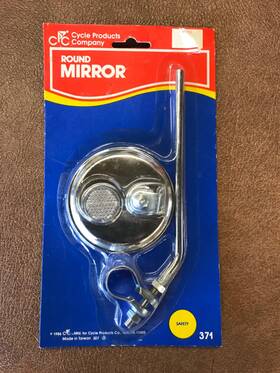
( Brand: Cycle Products Company ), ( Type: Handlebars ), ( Color: Chrome ), ( Country Of Origin: United States ), ( Vintage: Yes ), ( UPC: 035011003719 )
Review CYCLE PRODUCTS COMPANY Vintage Bicycle Round Rear View Mirror #371
The **1986 Cycle 035011003719 Round Rear View Mirror (Model 371)** is a classic, functional accessory designed to enhance visibility and safety for cyclists during the late 1980s, when road safety awareness was beginning to gain prominence. Crafted with a utilitarian yet stylish approach, this rear view mirror features a sleek, rounded convex lens encased in a sturdy, black plastic frame, which was a common design choice for its era. The mirror s convex curvature provides a wider field of vision, allowing riders to monitor approaching traffic, pedestrians, and potential hazards without the need to turn their heads repeatedly. The mounting mechanism is simple yet effective, featuring a secure clamp that attaches directly to the bicycle s frame or handlebars, ensuring stability even during high-speed riding or rough terrain. This model was likely produced with durability in mind, using materials that could withstand the elements, including rain, dust, and minor impacts, making it a reliable companion for daily commuters and recreational cyclists alike. Its compact size and minimalist design also contribute to an unobtrusive aesthetic, blending seamlessly with the minimalist styling trends of the late 20th century. While not as advanced as modern digital or Bluetooth-enabled mirrors, the 1986 Cycle 035011003719 Rear View Mirror remains a nostalgic yet practical piece of cycling history, embodying the practicality and simplicity of an earlier era when technology was less integrated into everyday cycling gear. Today, it serves as both a functional restoration piece for vintage bike enthusiasts and a conversation starter for those who appreciate the evolution of cycling accessories.
### **Analysis of Buying a 1986 Bicycle with Part Number 035011003719 (Round Rear View Mirror, Model 371)**
#### **Pros of Purchasing This Item**
1. **Authenticity and Vintage Appeal**
- The 1986 model suggests it is a classic or retro bicycle, which may appeal to collectors or enthusiasts of vintage cycling gear.
- Original parts from this era can be harder to find, making it a potentially valuable or nostalgic addition to a collection.
2. **Compatibility with Classic Bikes**
- If you own or restore a vintage bicycle from the 1980s, this mirror is likely an exact or near-exact replacement, ensuring proper fit and function.
- Many older bikes were designed with round rearview mirrors, so this part may be necessary for authenticity in restorations.
3. **Potential for Customization**
- Vintage parts can be used to give a modern bike a retro look, appealing to those who enjoy blending old and new components.
- The mirror s design may complement certain aesthetic themes, such as steampunk or classic road bike styling.
4. **Functionality**
- Rearview mirrors improve safety by allowing the rider to check traffic without turning their head, a feature that remains relevant today.
- If the mirror is in good condition, it will serve its original purpose effectively.
5. **Historical or Sentimental Value**
- For someone with a personal connection to the bike or era (e.g., a childhood bike, a family heirloom, or a bike from a specific event), purchasing this part may hold emotional significance.
---
#### **Cons of Purchasing This Item**
1. **Age and Wear**
- A 1986 part is likely to show signs of aging, such as rust, cracked plastic, or degraded adhesive, especially if it has been stored improperly.
- The mirror may not function as intended if the mechanism (e.g., adjustment screws or mounting hardware) is corroded or broken.
2. **Availability of Modern Alternatives**
- Modern rearview mirrors are often more durable, lightweight, and ergonomic, with features like adjustable angles, anti-fog coatings, or integrated lights.
- Buying a vintage part may limit your ability to upgrade to contemporary safety or convenience features.
3. **Compatibility Issues**
- While the part number suggests it fits a specific model (likely a 371 series bike), slight variations in frame or mounting points between manufacturers or models could make installation difficult.
- If the bike has been modified over the years, the original mounting location might no longer exist or may require additional work to adapt.
4. **Maintenance and Longevity**
- Vintage parts may require more frequent maintenance (e.g., lubricating moving parts, replacing worn seals) compared to modern equivalents.
- The mirror s plastic or metal components could degrade over time, leading to eventual replacement or failure.
5. **Cost vs. Value**
- If the part is sold at a premium due to its age or rarity, it may not be cost-effective compared to buying a new or used modern mirror.
- The effort required to source, install, and maintain a vintage part could outweigh the benefits for casual riders.
6. **Safety Concerns**
- Older mirrors may not meet current safety standards (e.g., visibility requirements, durability tests) and could pose risks if they fail unexpectedly.
- The mounting mechanism might not be as secure as modern designs, increasing the chance of detachment during use.
7. **Limited Support or Warranty**
- Unlike new parts, vintage components typically come with no warranty or manufacturer support. If issues arise, repairs or replacements would be at your own expense.
---
#### **Conclusion**
Buying a 1986 round rearview mirror (part number 035011003719) for a vintage bicycle can be a rewarding purchase if you prioritize authenticity, nostalgia, or restoration accuracy. The part s historical value and compatibility with classic bikes make it attractive for enthusiasts, collectors, or those restoring period-appropriate equipment. However, the potential downsides such as wear, limited functionality compared to modern alternatives, and maintenance challenges must be carefully considered.
For most casual or modern riders, a new or used rearview mirror would likely offer better durability, safety, and convenience without sacrificing performance. The vintage part is best suited for those who:
- Own or restore a specific 1980s bike model (e.g., a 371 series) and need an exact replacement.
- Value the aesthetic or historical significance of the part over practicality.
- Are prepared to inspect, clean, and possibly modify the part to ensure proper function.
If the mirror is in excellent condition and you have no issues with its age, it could be a worthwhile addition. Otherwise, weighing the trade-offs against the benefits of modern alternatives is advisable.
---
#### **Recommendation**
- **Purchase the vintage mirror if:**- You are restoring a 1980s bike and need an authentic part.
- You have inspected it thoroughly and confirmed it is functional and free of major defects.
- You are willing to invest time in maintenance or potential modifications to ensure it works safely.
- **Avoid purchasing the vintage mirror if:**- You are a casual rider and prioritize modern safety and durability.
- The part is sold at an inflated price with no clear benefits over new alternatives.
- You cannot verify its condition or compatibility with your bike s current setup.
- **Alternative options:**- Buy a **new or used modern rearview mirror** (e.g., from brands like Bell, Giro, or generic bike shops) for better reliability and adjustability.
- Check for **universal vintage mirrors** that may fit your bike s frame without exact part matching.
- Consider **removing the mirror entirely** if your bike s design allows for alternative safety measures (e.g., helmet-mounted mirrors or improved visibility through frame design).
Details:
Item is in new old-stock condition. For your consideration is a vintage 1986 Cycle Products BiCycle Round Rear View Mirror #371. Packaging with some distress from age, storage and handling. I try to have all research done the best of my knowledge and proper name terminology in listings.
Acquired from a biCycle enthusiast estate.
specifications vintagebikepartiz:
- brand: Cycle Products Company
- type: Handlebars
- color: Chrome
- country of origin: United States
- vintage: Yes
- upc: 035011003719
shipping vintagebikepartiz:
- class: Economy
- type: Fixed
- transit: 4-8 Days
- cost: $8.50
- service: Economy
returns vintagebikepartiz:
- policy: No Returns
offer vintagebikepartiz:
- options: Ship-to-home
- sold: 0
- started: May 24, 2026
- availability: In Stock
- quantity: 1
general vintagebikepartiz:
- Cycling > Vintage Cycling > Vintage BiCycle Parts
payments vintagebikepartiz:
- wallet: Apple-pay
- credit card: Visa
- other
seller vintagebikepartiz:
- rating: 100.0%
- # reviews: 2565
- city: El Cajon, California
Cycle Products Company 035011003719 Is Similar To:
- 116801 116801 Cycle Pro Vintage Drop (33.1% similar) ...(May 3rd, 2017)
- 00530 Cycle Products Li For 035011005300 (41.9% similar) For shipping out of the us, I will use global system. For non us buyers: buyer paid, or free shipping is in the only. PC adjustable kickstand capability. New vintage 1989 Cycle Products co...(January 8th, 2018)
- 02525 Box Only Schwinn Vintage 1970s Cycle Aid (36.9% similar) I offer multiple shipping methods please choose the one that has most value to you. You are buying on a vintage Schwinn Cycle aid box only that was meant to contain training wheels for 16 bike. It measures long, wide, and high. There are a few small holes as well, but the box has its integrity, ...(December 20th, 2016)
- 035011000152 Cycle Products Vintage Bicycle (47.2% similar) Not sure what model of bike this fits but the cable itself is 65 long with a 60 outer covering. It has a barrel end and mushroom see photos to match up package is dirty but the cable still sealed...(March 16th, 2017)
- 035011006185 Vintage Cycle Products 26 (26.2% similar) Nos, in original box, box has some shelf ware...(December 14th, 2017)
- 035011066301 Vintage Cycle Bike Extras Mileage Meter Odometer Fits (40% similar) ...(June 15th, 2018)
- 1-374 Cycle Products Nib Vintage (39.7% similar) If you win the offer please pay in a timely manner. The packaging has some bending and wear to edges from storage. Nib vintage 1986 Cycle Products oblong mirror this mirror is unopened and in its original packaging. Please see photos for condition...(September 25th, 2017)
- 10 Cycle Products Li Country-region 035011000107 (45.5% similar) Brand biCycle standard chain connecting links. Store id code: D4U-98. The part number is 10. They were made in their size is 1/2 x USPS priority shipping also available. They are brand new, sealed in their original package. Item: a vintage package of Cycle Products co...(May 8th, 2017)
- 156mm Release Vintage Quick Pro Skewer Cycle Italy (30.9% similar) Vintage Cycle pro quick release skewer. What you see is what you get. Not 100 sure how you measure these but the shaft is about 156MM in total. All business is greatly appreciated...(February 19th, 2015)
- 163-520 Cycle Vintage Style Bicycle Handle Bar Rubber White Grips Fits (41.6% similar) Vintage biCycle handle bar rubber grips color: white long fits 7/8 handlebar made by f r Cycle, inc...(April 9th, 2018)
- Race bicycle Three Racing 1899-1900 Cycle The American Invoices Association (20% similar) It was at one time associated with the famous African American racer major Taylor. Minor soil, light wear, folds. Condition notes 3 sheets. The American Cycle racing association was a commercial group which promoted biCycle races and racers in cooperation and competition with the league of American ...(March 6th, 2015)