SCHWINN 20243 Derailluer Cable Casing Nos 30 X66 1970S
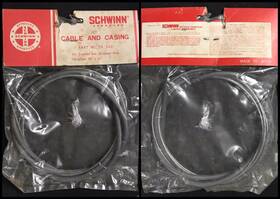
( Brand: Schwinn ), ( Manufacturer Part Number: 20243 ), ( Type: Derailluer ), ( Color: Silver ), ( For Bike Type: Universal ), ( Country Of Origin: Japan ), ( Vintage: Yes )
Review SCHWINN Approved Derailluer Cable And Casing 30 Inch X66 Vintage Nos 1970s Part #20243
The **Schwinn 20243 Derailleur Cable Casing (30" x 66" NOS, circa 1970s)** is a meticulously preserved, no-sticker (NOS) original component that embodies the rugged reliability and timeless craftsmanship of mid-century Schwinn bicycle engineering. This high-quality derailleur cable casing, likely manufactured during the late 1960s or early 1970s, represents a rare opportunity to restore or upgrade a vintage Schwinn frame with authentic, period-correct hardware. Crafted from durable, corrosion-resistant steel, the casing features a smooth, slightly textured exterior designed to withstand the demands of daily riding while maintaining a sleek, understated appearance. Measuring **30 inches in length** ideal for mid-range derailleur setups it pairs seamlessly with the **66-inch outer cable length**, ensuring proper tension and smooth shifting mechanics. The casing s robust construction, reinforced at critical points, reflects the engineering standards of an era when durability was prioritized over modern lightweight materials. Whether used to revive a classic Schwinn Stinger, Super Sport, or other vintage models, this NOS casing not only enhances the bike s authenticity but also contributes to a more authentic riding experience. Its availability in this condition free of modern modifications or replacements makes it a prized find for collectors, restorers, and enthusiasts seeking to preserve the integrity of their Schwinn bicycles. Perfect for those who appreciate the blend of nostalgia and functionality, this derailleur cable casing is a testament to the enduring legacy of American bicycle manufacturing.
### Pros and Cons of Buying a Schwinn 20243 Derailleur Cable Housing (30 x 66 mm, No-Snap, 1970s Vintage)
---
#### **Pros:**1. **Authentic Vintage Aesthetic** The 1970s design of the Schwinn 20243 derailleur cable housing adds a nostalgic, retro appeal to a bike build or restoration project. This can be appealing to collectors, enthusiasts, or those who appreciate classic American bicycle craftsmanship.
2. **Durability and Build Quality** Schwinn bicycles from the 1970s were known for their sturdy construction, often using heavy-duty materials like steel. The cable housing may retain some of this robustness, especially if it has been well-maintained or is in good condition.
3. **Compatibility with Vintage Systems** If you re restoring or building a bike from the same era, this cable housing will likely fit seamlessly with other 1970s Schwinn or similar components (e.g., Sturmey-Archer hubs, internal gear hubs, or older derailleur systems). It avoids the need for adapters or modifications in some cases.
4. **Collectible Value** For some, vintage Schwinn parts hold sentimental or monetary value, especially if they are rare or in pristine condition. This could make the purchase worthwhile for collectors or those looking to preserve history.
5. **Functionality for Light Use** If the housing is in good shape, it may still function adequately for casual riding, commuting, or light touring. It s not designed for modern high-performance demands, but it could work for basic use.
6. **Budget-Friendly Alternative** Compared to new cable housing, this vintage piece might be cheaper, especially if sourced from a thrift store, estate sale, or online marketplace. This could be a cost-effective way to complete a project without investing in modern parts.
7. **Unique Customization** Using vintage parts can give a bike a one-of-a-kind look, distinguishing it from modern builds. This can be attractive to customizers or those who prioritize individuality over uniformity.
---
#### **Cons:**1. **Lack of Modern Standards** Vintage cable housing is not designed to meet contemporary performance or durability standards. Modern cable housing is often thinner, lighter, and more resistant to corrosion, wear, and weathering. The 1970s version may be thicker and heavier, which could affect shifting smoothness or bike handling.
2. **Potential for Wear and Corrosion** Even if the housing looks intact, it may have internal corrosion, rust, or degraded internal components (e.g., the cable itself or the outer jacket). This can lead to shifting issues, cable binding, or failure over time.
3. **Limited Availability of Replacement Parts** If the housing fails or needs repair, finding compatible replacement parts (e.g., new cables, seals, or housing) can be difficult. Modern systems have standardized parts, while vintage systems often require specialized or hard-to-find components.
4. **Compatibility Issues** While it may fit some vintage setups, it might not work well with modern derailleurs, shifters, or hubs. The dimensions (30 x 66 mm) are standard for many eras, but the internal routing or cable pull might not align perfectly with newer components, leading to poor shifting or the need for adapters.
5. **Maintenance Challenges** Vintage cable housing often requires more frequent maintenance due to wear. Modern housing is designed to last longer with less upkeep. You may need to replace the housing or cables more often, adding to long-term costs.
6. **Potential for Misalignment or Binding** Over time, the housing may develop kinks, twists, or misalignments, causing the cable to bind or shift poorly. Modern housing is more forgiving in terms of routing and flexibility.
7. **Safety Concerns** If the housing is cracked, corroded, or otherwise compromised, it could fail catastrophically, leading to a derailleur or cable snap. This poses a safety risk, especially if the bike is ridden frequently or in demanding conditions.
8. **Limited Warranty or Support** Unlike new parts, vintage components typically come with no warranty or manufacturer support. If issues arise, you re on your own for repairs or replacements.
9. **Aesthetic vs. Function Trade-Off** While the look is appealing, the performance may not justify the use of vintage parts for serious riding. Modern housing offers better reliability, lighter weight, and easier maintenance.
10. **Ethical or Environmental Considerations** Purchasing vintage parts may contribute to the cycle of consuming used items, which could have environmental implications if the part is not repurposed responsibly. Newer, more efficient materials might be a better long-term choice.
---
### **Conclusion:**Buying a vintage Schwinn 20243 derailleur cable housing can be a rewarding experience if you prioritize nostalgia, authenticity, or a unique aesthetic for a project. It offers a piece of cycling history and may fit well within a restoration or custom build focused on the 1970s era. However, it comes with significant trade-offs in terms of performance, durability, and maintenance demands. The housing is not ideal for high-performance or long-term use without extensive modifications or upgrades.
For most modern riders, especially those who prioritize reliability, shifting smoothness, and low maintenance, new or modern cable housing is the better choice. Vintage parts are best suited for hobbyists, collectors, or those building bikes purely for aesthetic or historical value.
---
### **Recommendation:** - **Buy it if:**- You are restoring a 1970s Schwinn or similar bike and want to stay true to the original components.
- You are a collector or enthusiast who values the vintage look and doesn t mind the limitations.
- You are on a tight budget and can accept the trade-offs for a one-time or low-usage project.
- You are willing to invest time in maintenance, testing, and potential upgrades to mitigate performance issues.
- **Avoid it if:**- You plan to use the bike for frequent, demanding, or high-performance riding.
- You prioritize modern reliability, ease of maintenance, and longevity over vintage aesthetics.
- You cannot easily source replacement parts or are uncomfortable with the risks of failure.
- You are building a bike for practical, everyday use where performance and safety are critical.
**Alternative Approach:** If you like the look of vintage parts but want better performance, consider:- Using the vintage housing as a decorative element (e.g., for a frame or fork) while installing modern cable housing internally.
- Pairing it with a modern derailleur or shifter that can tolerate the vintage housing s limitations.
- Restoring and preserving it as a display piece rather than a functional component.
Ultimately, the decision depends on your priorities whether you re building a bike for function, form, or both.
Details:
SCHWINN APPROVED DERAILLUER CABLE CASING 30 x66. Item as pictured, please review all photos for details and overall condition, before making a purchase. To recycle and keep shipping costs down, we reuse boxes, including clean food packages grocery story plastic bags for safe packaging of items. With love and blessings.
part #: 20243 price
- $27.00
specifications vintagebikepartiz:
- brand: Schwinn
- mpn: 20243
- type: Derailluer
- color: Silver
- for bike type: Universal
- country of origin: Japan
- vintage: Yes
general vintagebikepartiz:
- Cycling > Vintage Cycling > Vintage Bicycle Parts
payments vintagebikepartiz:
- wallet: Paypal
- other
- credit card: Mastercard
offer vintagebikepartiz:
- sold: 0
- availability: In Stock
- started: May 13, 2026
- quantity: 1
- options: Ship-to-home
seller vintagebikepartiz:
- city: Waycross, Georgia
- # reviews: 740
- rating: 99.5%
shipping vintagebikepartiz:
- type: Calculated
- transit: 8-11 Days
- service: USPS Ground Advantage
- carrier: USPS
- cost: $6.07
- class: Standard
returns vintagebikepartiz:
- policy: No Returns
Schwinn 20243 Is Similar To:
- S.t.2.74 Schwinn Vintage 1974 Crank (31.3% similar) The sprocket has scuffs, scratches and light rust. Its in good used working condition. Vintage 1974 Schwinn crank, sprocket, bearings and hardware. There is some rust on the crank...(May 3rd, 2017)
- 00036 Schwinn Vintage Approved Black Bike Carrier Saddle Bag (36.8% similar) Approximately 12 inches long, this is a vintage Schwinn approved black storage bike bag. Really nice looking bag. Smoke free home outer side compartments, inside looks like canvas with lots of room and pocket, no wear on buckles, top bag by the studs have see pictures. Please see my other offers...(August 13th, 2018)
- 00662 Schwinn Nos Vintage Basket (33.9% similar) Made in japan. This is a vintage Schwinn hardware set for mounting rear folding basket new in original package. Discounts on multiples. Shipping is 3 in the us. These are selling for 20 each elsewhere on...(February 20th, 2018)
- 02-78 06-78 F3 Schwinn Vintage (24.2% similar) Vintage Schwinn approved 27 wheels front rear w free wheel made in France excellent condition great for bicycle or collector complete set includes 5 gear rare model f3 original rim strips included...(August 1st, 2017)
- 02525 Box Only Schwinn Vintage 1970s Cycle Aid (33.3% similar) I offer multiple shipping methods please choose the one that has most value to you. You are buying on a vintage Schwinn cycle aid box only that was meant to contain training wheels for 16 bike. It measures long, wide, and high. There are a few small holes as well, but the box has its integrity, ...(December 20th, 2016)
- 03382 Schwinn Vintage Old School Bmx Silver Blue Prizm Sting Decals (26.4% similar) ...(June 12th, 2018)
- 03588 Schwinn Authentic Nos 70s (34.1% similar) Offered in this offer is a vintage original Schwinn voyageur 11. 8 water slide decal set from the 70S or 80'S. What I always loved about Schwinn was that they so readily made replacement decals available for their bikes - these are the real deal, by grislier corp in Chicago. They are in good ...(February 8th, 2018)
- 04-743 Schwinn Vintage Bmx Bicycle Foam Handlebar Grips Cruiser Team Nos (23.2% similar) ...(May 22nd, 2018)
- 040061 Schwinn Classic Chrome Seat Post Nos (29.6% similar) 1 side of the packaging is not stapled together so I was able to remove seat post and take pictures old Schwinn part other then that it has never been removed from plastic. Classic Schwinn chrome seat post x 14 with knurled top - nos new old stock package has 22 years shelf wear. Manufactured for ...(May 1st, 2018)
- 04104 Xchwinn Vintage Schwinn Deluxe (25% similar) New old stock looks like never used notice headlight mounting bracket in shorter than on direction sheet...(April 28th, 2017)
- Generator Part Schwinn 04140 Deluxe Set (29% similar) Ridge cycle inc...(March 2nd, 2015)