YAMAHA 20T-18T-16T Bike Rear Wheel Sprocket Moto
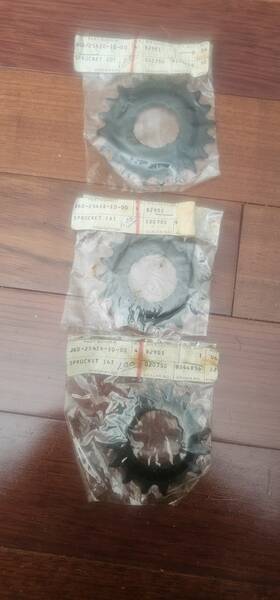
( Brand: Yamaha ), ( Manufacturer Part Number: 20T-18T-16T ), ( Model: YAMAHA MOTO 20T-18T-16T ), ( Part Type: Bike Wheel Sprocket ), ( For Bike Type: Bmx Bike Old School ), ( Vintage: Yes )
Review YAMAHA Lot Bike Rear Wheel Sprocket New Old Stock
The **Yamaha 20T, 18T, and 16T rear wheel sprocket** for the **1974 1976 models** of the iconic Yamaha TD1, TD2, and TD2E series motorcycles represents a critical yet often overlooked component essential for maintaining optimal performance, reliability, and longevity of these classic bikes. Designed specifically for the **2-stroke, air-cooled, single-cylinder engines** found in these models, these sprockets are forged from high-quality **chrome-molybdenum steel**, ensuring durability under the demanding conditions of high-speed riding, aggressive acceleration, and prolonged use. The **1974 1976 models** feature a distinct sprocket design tailored to the **Yamaha s unique drivetrain configuration**, with precise tooth spacing and a robust mounting system that aligns perfectly with the **chain-driven rear wheel assembly**. Whether you re restoring a vintage TD1 for weekend cruising or preparing a TD2E for track days, these sprockets are engineered to minimize chain wear, reduce backlash, and deliver smooth, consistent power transfer from the engine to the rear wheel critical for preserving the bike s original performance characteristics.
The **20T, 18T, and 16T variations** cater to different riding preferences and tuning needs. The **20-tooth sprocket** offers a balanced power delivery, ideal for stock or lightly modified bikes seeking a smooth, responsive ride without excessive strain on the engine. The **18-tooth sprocket**, slightly more aggressive, provides a quicker gear ratio, enhancing acceleration and top-end speed while maintaining manageable chain tension. Meanwhile, the **16-tooth sprocket** is designed for riders who prioritize raw performance, offering a significant power boost and higher RPM potential though it may require adjustments to the chain tensioner and drivetrain setup to prevent premature wear. Each sprocket is meticulously machined to Yamaha s original specifications, ensuring a **perfect fit** with the **518 or 520 chain** used in these models, while also accommodating aftermarket chains if desired. The **press-fit design** ensures secure mounting on the **rear wheel hub**, reducing the risk of slippage or misalignment, which is particularly important for bikes that see frequent use or are subjected to off-road conditions.
Beyond their functional role, these sprockets play a vital part in the **aesthetic and mechanical integrity** of the Yamaha TD series. The **clean, uncluttered design** of the sprocket hub complements the bike s minimalist yet robust engineering, while the **precise tooth profile** ensures smooth engagement with the chain, reducing noise and vibration a hallmark of Yamaha s attention to detail in its classic motorcycles. For collectors and enthusiasts, sourcing an **authentic OEM or high-quality aftermarket replica** of these sprockets is essential for maintaining the bike s historical accuracy, especially when participating in vintage motorcycle shows or restoration projects. Whether you re replacing a worn-out original or upgrading for performance, these sprockets are a **must-have component** for anyone committed to keeping their Yamaha TD1, TD2, or TD2E running at its best blending reliability, heritage, and performance in a single, compact yet indispensable part.
### **Pros and Cons of Buying a Yamaha 20T-18T-16T Rear Wheel Sprocket for a 1974-1976 Yamaha Motorcycle**
#### **Pros:**1. **Compatibility** These sprockets are designed specifically for Yamaha bikes from the 1974-1976 model years, ensuring a proper fit without modification.
2. **Performance Adjustment** Changing the sprocket size (20T, 18T, or 16T) allows for fine-tuning of gearing, which can improve acceleration, top speed, or throttle response depending on rider preference and riding conditions.
3. **Durability** Yamaha sprockets are typically made from high-quality steel, offering longevity if properly maintained.
4. **Ease of Installation** These sprockets are straightforward to install, requiring only basic tools and a chain adjustment afterward.
5. **Cost-Effective Upgrade** Compared to full drivetrain replacements, swapping a single sprocket is a relatively inexpensive way to modify bike performance.
6. **Aftermarket Support** Since these are common parts, finding replacements or additional sprockets (e.g., 17T, 19T) is easy if further tuning is desired.
7. **Maintenance Benefits** A properly sized sprocket can reduce excessive chain wear, leading to longer chain and sprocket life if the gearing is optimized for the bike s intended use.
#### **Cons:**1. **Potential Chain Wear** If the sprocket size is too small (e.g., 16T), it can cause excessive chain stretch or premature wear on both the sprocket and chain, requiring more frequent maintenance.
2. **RPM Increase** Smaller sprockets (e.g., 16T) will increase engine RPM at a given speed, which may lead to higher stress on the engine and transmission if not properly balanced with other modifications.
3. **Top Speed Limitations** A smaller sprocket (e.g., 16T) may reduce top speed if the engine is not tuned to handle the increased load, especially on older bikes with less power.
4. **Chain Adjustment Required** After installation, the chain may need frequent adjustments to maintain proper tension, especially if the sprocket size changes significantly.
5. **Potential Fitment Issues** If the sprocket is not an exact match (e.g., slightly worn or misaligned), it could cause uneven wear or even damage to the chain or rear wheel bearings.
6. **Limited Power Gain** On an older bike with a naturally aspirated engine, sprocket changes alone may not provide significant power gains unless combined with other modifications (e.g., carburetor tuning, exhaust upgrades).
7. **Resale Impact** If you plan to sell the bike later, some buyers may prefer stock or less aggressive gearing, potentially reducing resale value.
---
### **Conclusion:**Swapping a rear wheel sprocket on a 1974-1976 Yamaha is a practical and relatively low-cost way to adjust the bike s gearing for better performance or comfort. The choice between a **20T, 18T, or 16T** depends on your riding style:
- **20T (stock or slightly larger)** Best for cruising, reducing engine strain, and improving low-end torque.
- **18T (moderate reduction)** A balanced choice for daily riding, offering a good mix of acceleration and top speed.
- **16T (aggressive reduction)** Ideal for track use, aggressive riding, or if you prefer higher RPMs but may require more frequent chain maintenance.
If you re unsure, an **18T sprocket** is often a safe middle-ground option that enhances performance without extreme trade-offs.
### **Recommendation:**- **For street riding:** An **18T sprocket** is a solid choice, offering a noticeable improvement in acceleration without excessive wear.
- **For track or aggressive riding:** A **16T sprocket** can be used, but pair it with a **high-quality chain** and be prepared for more frequent adjustments.
- **For cruising or low-speed use:** A **20T sprocket** (or even slightly larger) may be preferable to reduce engine stress.
- **Always pair the sprocket change with a new chain** to prevent premature wear.
- **Consult a Yamaha specialist or bike mechanic** if you re unsure about the best fit for your specific riding conditions.
Ultimately, the right sprocket depends on your priorities whether you value acceleration, comfort, or longevity. Test ride the bike after installation to ensure it feels right before committing to a permanent change.
Details:
LOT 3 YAMAHA MOTO BIKE REAR WHEEL SPROCKET 20T-18T-16T 1974-1976. 20T model: J60-25420-10-00. 18T model: J60-25418-10-00. 16T model: J60-25416-10-00.
part #: 20t18t16t price
- $40.00
specifications vintagebikepartiz:
- brand: Yamaha
- mpn: 20t-18t-16t
- model: Yamaha Moto 20t-18t-16t
- part type: Bike Wheel Sprocket
- for bike type: Bmx Bike Old School
- vintage: Yes
returns vintagebikepartiz:
- policy: No Returns
shipping vintagebikepartiz:
- transit: 4-10 Days
- class: Standard
- cost: $8.00
- type: Fixed
- carrier: USPS
- service: USPS Ground Advantage
offer vintagebikepartiz:
- started: May 17, 2026
- quantity: 1
- sold: 0
- options: Ship-to-home
- availability: In Stock
payments vintagebikepartiz:
- wallet: Paypal
- other
- credit card: Visa
seller vintagebikepartiz:
- # reviews: 155
- city: Howell, New Jersey
- rating: 100.0%
general vintagebikepartiz:
- Cycling > Vintage Cycling > Vintage Bicycle Parts
Yamaha 20T-18T-16T Is Similar To:
- Kmx-750 Kent Motocross Bmx Old School Vintage Ahrma Yamaha Moto-bike Muscle Dg (23.1% similar) Up for grabs is a Kent km bmx motocross bike. New motocross grip tires and tubes. Husqvarna tank, Honda XR75 number plate, Kawasaki crossbar pad and Preston petty rear fender where all add INS...(November 17th, 2015)
- Bxm Yamaha Bike Motobike Lit-1001j-60-01 Parts List Vintage Moto J60 (32.9% similar) Please get a shipping quote before purchasing if you are outside the USA. Vintage J60 Yamaha moto bike, bx, lit 1001J parts list...(January 31st, 2015)
- 1970 Moto Bike Yamaha (28.3% similar) Early 1970 'S Yamaha bmx hard to find bike hard to pass up...(February 3rd, 2015)
- Lit-1162j-60-00 Yamaha Moto Bike Nice Vintage Rare 1974 Moto-bike Bmx Bicycle Owners Manual Booklet Oem (33.1% similar) Made in japan. Normal wear, small stains, bends, etc. 1974 Yamaha moto bike owner's manual good used condition. For sale, is this one vintage Yamaha manual...(March 10th, 2016)
- Yamaha 431-25391-90-00 Yz360 Mx400 It250 And Many More Rear Spoke Set (35.4% similar) Missing 3 washers. Comes with everything in image. Rear spoke set for Yamaha. 1979 : IT250 IT400 TT500 YZ250 1978 : 1977 : YZ400 1976 : 1975 : MX250 MX400 YZ360 1974 . Extremely rare...(September 2nd, 2024)
- Yamaha 90507-20030-00 Brand New Tension Spring (32.3% similar) Shipped with USPS ground advantage. Brand new Yamaha 90507-20030-00 tension spring...(September 15th, 2024)
- Yamaha 2142344300 4 Oem 90209-14022-00 214-23443-00-00 New In Bag (30.8% similar) Part #: Yamaha 2142344300 for sale...(October 18th, 2024)
- Yamaha J60-27851-00-00 Vintage 1974 Moto Bike Pedal Left Only (44% similar) 1974 Yamaha moto bike pedal - left only J60-27851-00-00 new old stock nos with original packaging...(October 22nd, 2024)
- Yamaha J60-22311-20-00 1975 Moto-bike Chain Guard Case Model B Osbmx (39.7% similar) 1975 Yamaha moto-bike chain guard J60-22311-20-00 case,chain model b USMC, the chain guard is in overall very nice shape with original finish and mounting brackets. The guard does have some other minor cosmetic flaws as detailed in the pictures. The front of the chain guard near lower portion is ...(June 22nd, 2025)
- Mishon Inc 519-ccb2402l Rear Brake Cable For Yamaha Moto 4 Tri 125 200 225 Yfm200 Yfm200dx Yt125 (23% similar) Fast delivery. Rear brake cable for Yamaha moto 4 Teri 125 200 225 YFM200 YFM200DX YT125 20E-26341-00-00 1NU-26341-00-00:: compatible with oem part numbers 20E-26341-00- 1NU-26341-00- 24W-26341-00- 29U-26341-00- 21V-26341-00- 52H-26341-00- 1985 YFM2 1986 -1989 YFM200DX, 1983 - 1985 YT125, YTM2...(September 6th, 2025)
- Yamaha 2hc-2510g-00-00 Boot Set Ball Joint New (38.1% similar) UPC 2HC-2510G-00- fitment. Yamaha, boot set ball joint, new - 2HC-2510G-00-00: 48.99: this is a genuine new Yamaha product...(February 18th, 2026)